A decade ago, I wrote a series of entries ranking my favorite albums from 1985 to 2004. My collection has expanded greatly since then, particularly in the last five years. So I wanted to see what has changed in 10 years.
The 2016 list has actually undergone a revision, so this list consolidates the two entries, with some slight changes.
Sturgill Simpson, A Sailor’s Guide to Earth
Henryk Górecki, Symphony No. 4
MONO, Requiem for Hell
Solange, A Seat at the Table
A Tribe Called Quest, We Got It From Here … Thank You 4 Your Service
Perfume, COSMIC EXPLORER
Drive By Truckers, American Band
Shaprece, COALS
Cocco, Adan Ballet
Colvin & Earle, Colvin & Earle
Other favorites from the year:
Utada Hikaru, Fantôme
Ty Herndon, House on Fire
Eluvium, False Readings On
Santigold, 99 Cents
Explosions in the Sky, The Wilderness
Blood Orange, Freetown Sound
Colin Stetson, Sorrow: A Reimagining of Gorecki’s Third Symphony
John Adams, Scheherazade.2
The 10 favorites remain the same, while Utada Hikaru and Ty Herndon get bumped down. ANONHI, Pixies and De La Soul get bumped off completely.
I included Pixies because Head Carrier was an improvement over Indie Cindy, but it wasn’t stellar enough to hold onto its position. Albums by ANONHI and De La Sol were good, but over time, they couldn’t hold onto to their status as favorites.
As I mentioned before, lists from this decade probably won’t see much shifting, as my focus continues to move to exploring catalog. Most of the 2016 releases I bought after the year had passed were vinyl issues.
A Bruce Springsteen compilation accompanying the release of his autobiography did set me on a course to explore his earlier albums.
A decade ago, I wrote a series of entries ranking my favorite albums from 1985 to 2004. My collection has expanded greatly since then, particularly in the last five years. So I wanted to see what has changed in 10 years.
Do I have new favorites? Which ones have fallen out of favor? This time around, we’ll cover a greater span of time from as recently as last year, all the way to 1978!
This most recent decade won’t see much in the way of significant revisions, as I explore deeper into catalog releases than following new artists. Wouldn’t it be odd if I discover new artists from 2017 five years from now? Probably not.
Jason Isbell’s previous two albums ranked high on the Favorite Edition lists of 2013 and 2015, but The Nashville Sound had a tenuous grip on its position in the 2017 list. The late discovery of Sampha and Eluvium gave Isbell the final nudge.
Anne Dudley took up Eluvium’s vacated spot, nearly knocking Living Colour off.
Brandon Stansell makes his first appearance on the list. Stansell performed at the Concert for Love and Acceptance, hosted by Ty Herndon. Like Herndon, Stansell is a country artist, although he’s starting his career out of the closet.
Just in time for the holiday season, a whole slew of box sets make it on the release calendar.
Thought Gang, Thought Gang, Nov. 2
So essentially a Julee Cruise album, minus Julee Cruise? David Lynch and Angelo Badalamanti recorded the material on this album from 1992-1993, but only now does it become public.
Midnight Oil, Armistice Day: Live at the Domain, Sydney, Nov. 9
You can’t watch a Midnight Oil performance without wanting to be Rob Hirst when you grow up.
Kate Bush, Remastered on CD 1, Nov. 16
Kate Bush, Remastered on CD 2, Nov. 30
Kate Bush’s early works suffered the fate of many albums rushed to a CD release — the vinyl masters were used without any consideration of the medium’s expanded dynamic range. Fans have been clamoring for better sound, and in fell swoop, Kate unleashes her entire catalog remastered.
ASIAN KUNG-FU GENERATION, Hometown, Dec. 5
Yeah, it seemed about time for a new AKFG album.
MONO, Nowhere Now Here, Jan. 19
Tamaki on vocals? Electronics? Are they going glitchy like tourmates Low?
Vinyl
Brian Eno, Ambient 1: Music for Airports, Nov. 16
I was wondering when this album was going to get reissued on vinyl.
The Police, Every Move You Make: The Studio Recordings, Nov. 16
In addition to the five studio albums remastered at 45 r.p.m., this box also includes a disc of rarities. I just might find an old copy of Message in a Box instead.
Kate Bush, The Red Shoes, Nov. 16
Kate Bush, Aerial, Nov. 30
Kate Bush, Remastered in Vinyl, Nov. 30
The remastered releases also include vinyl issues, but in the UK, the records will be available in four boxed sets as well as individually. One box set includes remixes and covers. I don’t feel the need to upgrade the vinyl I already have, but I’ve had my eye on The Red Shoes and Aerial.
Semisonic’s 2001 album All About Chemistry was an early entry in my Favorite Edition list that year. By the end of the year, it had been crowded out by a lot of really good Japanese indie rock. (AJICO’s Fukamidori and fra-foa’s Chuu no Fuchi would top the list.)
It ended up on the chopping block when money got tight a few years later.
This glowing review attempts to capture my enthusiasm for the album, but it reads pretty clumsily. “Blip on the proverbial pop music radar”? How did I find such phrasing acceptable?
Most reviewers I read at the time would use lyrics to explicate a songwriters’ state of mind, but I tended to write about what’s happening musically. I don’t do so on this review because Dan Wilson is a clever lyricist, and I actually paid as much attention to the words as the music.
That’s not to say I did a very good job of explaining how.
It’s tough to remember how prevalent the likes of Limp Bizkit and Korn were at the start of the 2000s, but my description of Wilson’s voice is a reaction to that. It also looks like a take a dig at Wayne Coyne, but in a way, it’s a dig at Wilson for having a smooth voice.
I’ve actually missed having this album in my collection. In the years since letting it go, I would crave hearing the title track.
But I also have to find some amusement in my naive enthusiasm for it. As voracious as my appetite for music was, I can’t say my knowledge ran deep nor wide. All About Chemistry seemed revelatory for its wit and melodic sense. I may have even played it on a shift at Waterloo and got some questionable looks from co-workers.
It’s an enjoyable album, but it’s not as profound as I thought it was.
Rewind takes a look at past Musicwhore.org reviews to see how they hold up today. The albums featured on Rewind were part of my collection, then sold for cash only to be reacquired later.
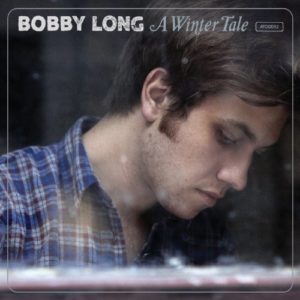
Yeah, I confess — I bought this album because of the cover.
Sonic Boom Records holds an annual clearance sale where new, unopened vinyl records are steeply discounted. I stopped when I spotted Bobby Long’s A Winter Tale as I flipped through the stacks. “Hmm, he’s … photogenic,” I mumbled to myself.
Having never heard of him, I made a note to check out his music later.
Bobby Long is a Brit, but his music is Americana. He signed with ATO Records in 2010 and released two albums and two EPs on the label. I found it remarkable that he managed to snag the attention of a large indie label such as ATO, rather than graduating up to that level.
Then I found out he’s buds with actor Robert Pattinson of the Twilight movies. One of his songs, “Let Me Sign”, wound up on the Twilight soundtrack. That would help.
A few streams and two days later, I went back to Sonic Boom and picked up A Winter Tale and its follow-up, Wishbone, for $5 each.
These kinds of … “impulse” purchases are prone to a Halo Effect, so it’s tough to gauge the effect of the cover art on my opinion.
I can say this much — he’s not bad.
Long’s rough-hewn voices comes from the Tom Waits school of delivery, and his writing is as rustic as anything you’d find on a Whiskeytown album. But he wouldn’t knock Jason Isbell or Sturgill Simpson off of any critics’ lists.
If any criticism can be lobbied at Long, it would be his music is probably too safely Americana. Subscribers of No Depression journal would probably eat it up. I’m not sure how much of a blip he would register outside that demographic.
Wishbone is the better album, but its cover photo is not as … compelling.
All that aside, Bobby Long turns out to be a satisfying discovery.
If ever I had an on-again, off-again relationship with an album, it’s Marquee Moon by Television.
Kronos Quartet introduced me to the band when they covered “Marquee Moon” for the compilation album Rubáiyát.
I didn’t get around to listening to the actual album till the early 2000s, when file sharing and a record store job made access to music easy. At the time, the likes of Interpol, the Killers and Franz Ferdinand were repackaging Joy Division, Duran Duran and Gang of Four (respectively) to much acclaim.
Television was a commonly cited influence and a gap in my knowledge of pop culture. So using my employee discount at Waterloo Records, I bought a copy of Marquee Moon.
I eventually sold it back to the store because I needed cash, but I had miscalculated my attachment to the album.
Marquee Moon had the disadvantage of being a garage rock influencer, and my tenure at Waterloo eventually soured me on the genre. That is, my co-workers played way too much garage rock, and I dislike it to this day.
But the album had already sunk its hooks into my subconscious. Over the subsequent decade and a half I would not own it, certain riffs would play in my head. The stuttering open of the title track, for one. The cadence on the word “Evil!” another.
If I encountered a track from Marquee Moon playing in the wild, I would start humming along as if the album had always been a part of my youth. It was an odd reaction to a work I relinquished but was unwilling to reacquire for more than what I originally paid.
I would eventually spot a used copy of a remastered version, and I’ve welcomed Marquee Moon back into my collection. Then I played it in its entirety and remembered why I may have let it go.
Marquee Moon was not designed for the compact disc format. The epic length of the title track makes sense as a conclusion to Side A, but it’s less effective when building to a mid-point. On CD, the subsequent tracks seem to lose steam. On vinyl, it feels like a reset.
Tom Verlaine’s voice is an acquired taste. The Kronos cover of “Marquee Moon” seemed to lack a clear melody. Listening to Verlaine’s delivery serves as an explanation.
But it’s tough not to be lured in by the guitar interplay between Verlaine and Richard Lloyd or by the funkiness of Fred Smith’s bass lines.
I may not feel much sentimentality for Marquee Moon, but I’m certainly charmed by it.