I haven’t really understood why Laurie Anderson is so revered, even after listening to some of her other albums (Mister Heartbreak, Strange Angels.) I finally got around to listening to Big Science, and then I knew.
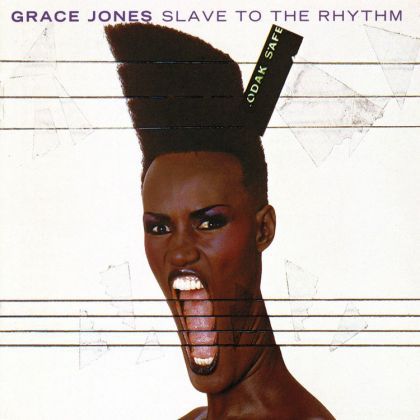
Grace Jones, Slave to the Rhythm
I like Warm Leatherette more, but as far as album covers go, Slave to the Rhythm has an iconic one.
Sturgill Simpson, Cuttin’ Grass, Vol. 2
I’m not sure if the first volume of Cuttin’ Grass was meant to reveal any new facets to Simpson’s early albums, but it feels like the second volume does a better job of it.
Heaven 17, Penthouse and Pavement
Heaven 17 gets thrown in with Tears for Fears, ABC and Depeche Mode in music recommendation engines, but Penthouse and Pavement shows they were a little less melodic and a bit less danceable than those bands. And that’s not a knock.
I liked Rogue One probably a lot more than an average Star Wars fan might, so I was willing to entertain Riz Ahmed’s hip-hop work with the usual skepticism afforded to Hollywood actors dabbling in music. This work is no dilettante effort. Ahmed prosecutes the societal forces in the UK that brought about Brexit in an astonishing performance.
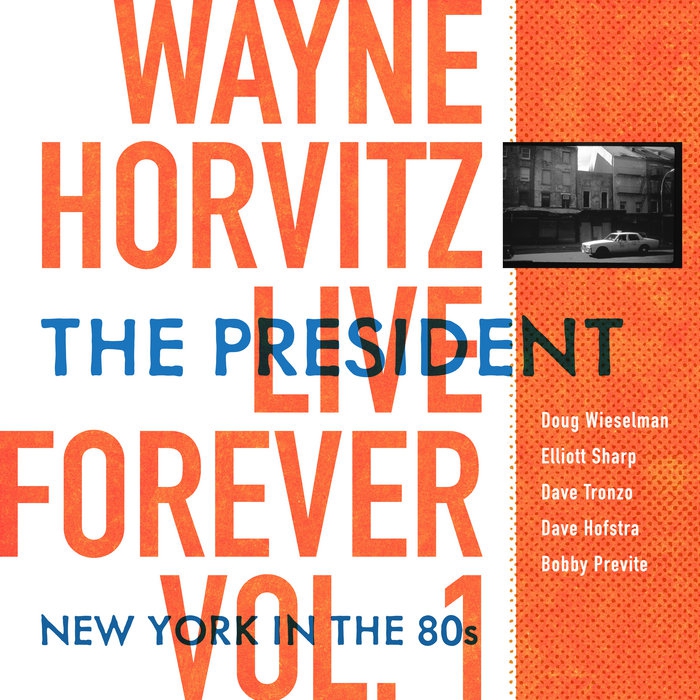
Wayne Horvitz, Live Forever, Vol. 1: The President – New York in the 80s
Wayne Horvitz dives into his archive to surface this must-have collection of live recordings and outtakes.
Kelela, Take Me Apart
I love how modern day R&B artists are willing to blur the lines between pop music and indie rock.
fIREHOSE, If’n
I’ve known about this album since it was first released in 1987, but I was too young at the time to have understood the impact of the Minutemen on independent rock.
sungazer, vol. I sungazer, vol. 2 Adam Neely, time//motion//wine
I never paid much attention to YouTube till I learned about Adam Neely and music theory YouTube. It’s been a year now since I discovered his channel, and YouTube has since eclipsed Science Channel as my television entertainment of choice. Neely’s own music combines electronic beats with rhythmically complex jazz, and while I enjoy watching him explain music theory, I sometimes wish the YouTube algorithm would give him enough slack to create more music.
What is the memory you most associate with this title?
I don’t actually have a specific memory tied to this album. It was released before Nick Lachey became a reality TV star, and it was one of dozens of teen pop albums released in the wake of ‘NSync and Backstreet Boys. But for some inexplicable reason, I’m always kind of rooting for Lachey.
I recognize that he’s pretty, and that is probably clouding a lot of my judgment. But I bought Revelation in the interest of understanding why teen pop became so ascendant in the late 90s / early 2000s. (I failed.) When his marriage to Jessica Simpson went on the rocks, his interview with Rolling Stone actually humanized him for me. Also, he posed shirtless in the photo shoot for the article.
So, yeah, I’ll cop to buying this album because sometimes, I just like the pretty faces on the album cover.
What was happening in your life when it was released?
Earlier in 2000, I left my job with the newspaper for an even worse one with a startup. I didn’t last more than 2 months before a friend of mine recommended me for a job at her company. I would stay at that job for 18 months before getting laid off.
But it marked the pivot when I stopped being a journalist and started being a web developer. I learned on the job, but I had already trained through community college classes and self-built projects.
I developed enough of an aptitude for programming that I managed to survive a few rounds of lay-offs before getting the ax in August 2001. Getting paid to program, however, insured I would never go back to journalism.
What was happening in your life when you bought it?
Revelation was released in Sept. 2000 and by Nov. 2000, I had already posted a review of the album. That would seem to indicate I may have bought the album shortly after its release. Perhaps even on release day.
It’s also possible I had downloaded the album through the Evil Sharing Networks before committing to purchasing it.
All that to say, the previous answer applies to this answer.
I will say this time of my life was my first bout of financial security. I was earning enough of a salary that car repair expenses didn’t tank me, and I could afford to buy incredibly expensive Japanese indie rock albums from overseas.
Because of that prosperity, I started to build a home recording studio. I dropped money on Cakewalk 9.0, and bought a bass guitar and electric guitar. I went so far as to start taking guitar lessons, bringing in band scores of my favorite Japanese artists to my instructor.
Oh, and also — I registered the domain name “musicwhore.org” and consolidated all the pieces of music writing I published under other site names.
What do you think of it now?
I am less severe on teen pop today than I was at the time of the album’s release. So a lot of the things I said in the original review probably still apply, just without the rockist attitude.
I have spotted the original self-titled 98 Degrees debut album at the thrift shop a number of times, but I have so far resisted completing my collection. (The previous sentence implies that I also own the group’s comeback album, 2.0, from 2013, and you would be correct.) I did, however, finally pick up Nick Lachey’s solo debut.
![[Yo Majesty - Return of the Martriach]](https://musicwhore.org/wp-content/uploads/2021/05/yo-majesty-return-of-the-matriarch.jpg)
![[Laurie Anderson - Big Science]](https://musicwhore.org/wp-content/uploads/2021/05/LaurieAndersonBigScience265409_f.jpg)
![[Jacob Collier - In My Room]](https://musicwhore.org/wp-content/uploads/2021/04/JacobCollierInMyRoom20265238_f.jpg)
![[Soundtrack - Tonari no TOTORO]](https://musicwhore.org/wp-content/uploads/2021/04/2018265025_f.jpg)


![[Penzias and Wilson - Rescue the Fly]](https://musicwhore.org/wp-content/uploads/2021/03/penzias-and-wilson-rescue-the-fly.jpg)
![[98 Degrees - Revelation]](https://musicwhore.org/wp-content/uploads/2021/03/98DegreesRevelation200016490_f.jpg)